Article
HubSpot vs Custom CRM Australia
A decision framework for Australian managers choosing between HubSpot and a custom CRM: cost shape, process fit, and the point where off-the-shelf starts fighting you.
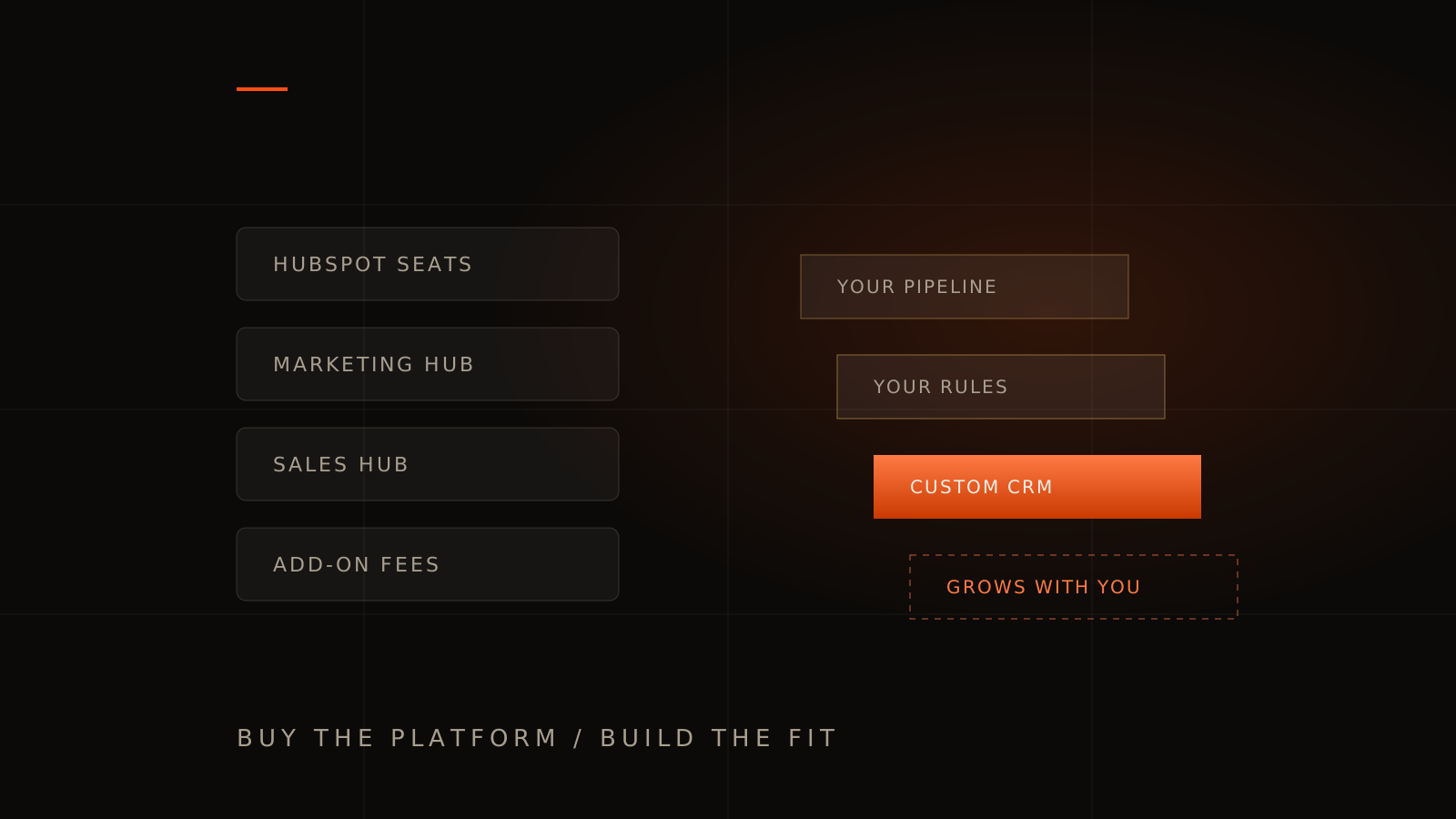
Australian SMBs often reach the same awkward moment: spreadsheets and inbox folders can no longer run the sales pipeline, but a full enterprise CRM feels like buying a warehouse to store a ute. HubSpot sits in the middle as a powerful off-the-shelf platform. A custom CRM sits on the other side as software shaped around how you already win work.
Neither option is automatically right. This guide helps you choose based on process fit, cost shape, integrations, and the risk of outgrowing tools that were never designed for your workflow.
What HubSpot does well
- Fast time to value. Standard pipelines, email tracking, forms, and reporting can be live quickly.
- Marketing and sales in one ecosystem. If you want CRM records tied to email campaigns and landing pages, HubSpot is coherent.
- A large app marketplace. Many common tools already connect.
- Familiar hiring pool. Staff and contractors are more likely to have used it before.
HubSpot is often the correct buy when your sales process is close to a standard funnel and you value speed over perfect fit. The danger is assuming the platform will stay cheap or flexible once you need advanced automation, custom objects, or unusual quoting logic.
Where HubSpot gets expensive or awkward
Costs scale with seats, hubs, and feature tiers. What starts as a neat CRM can become a stack of upgrades when you need deeper automation, custom reporting, or advanced permissions. Teams also bend their process to match the tool, which feels efficient until the tool starts rejecting how your business actually sells.
If your pipeline includes staged site visits, multi-party approvals, field service statuses, membership renewals, or industry-specific compliance fields, you will eventually notice the friction. Workarounds multiply. Adoption drops. The CRM becomes a place people update after the deal, not during it.
When a custom CRM is the better investment
A custom CRM earns its keep when the software should match the business, not the other way around. Typical signals:
- Your sales stages do not map cleanly to generic deal pipelines.
- Quotes, jobs, memberships, or retainers need fields and rules HubSpot fights.
- You need tight integration with existing operational tools rather than another silo.
- Seat-based SaaS pricing would grow faster than the value of standard features.
- Staff adoption depends on a simple interface designed for your day, not a mega-suite.
Custom does not mean rebuilding email marketing from scratch. It means owning the system of record for customers, pipeline, and operational handoffs. Our CRM design and development work focuses on that core, then connects the pieces you still want to buy.
A build vs buy checklist for Australian managers
Use the same discipline we outline in custom software vs off the shelf:
- Buy commodities: email delivery, card payments, generic calendaring.
- Build differentiation: the workflow that makes your sales and delivery unique.
- Calculate three-year cost, not month one. Include seats, admin time, and rework.
- Prototype the awkward screens first. If HubSpot can do them cleanly, buy. If every demo needs a compromise, custom deserves a scoped quote.
Many SMBs land on a hybrid: HubSpot or another platform for marketing automation, with a custom operational CRM for jobs, quoting, and customer history. The architecture decision matters more than brand loyalty to either camp.
How to decide in one workshop
Map your real pipeline on a whiteboard. List every status, handoff, integration, and report that managers check weekly. Score each item as native in HubSpot, possible with paid add-ons, or forced workaround. If the forced workarounds sit on revenue-critical steps, custom or hybrid is usually cheaper over three years than paying staff to fight the tool.
If you want that workshop facilitated with a technical recommendation, book a free Discovery Session. You will leave knowing whether to buy, build, or combine, with the cost drivers named before anyone writes a line of code.
HubSpot vs custom CRM FAQs
Is HubSpot too big for a small Australian business?
Not always. Free and lower tiers can work for simple pipelines. It becomes the wrong fit when seat and hub costs rise faster than the process complexity you actually need.
Is a custom CRM only for enterprises?
No. Many Australian SMBs need a focused system for quoting, jobs, and customer history. Custom can be smaller and clearer than a suite that tries to do everything.
Can we migrate off HubSpot later?
Yes, if your data export and process documentation are clean. Plan migrations around contacts, companies, deals, notes, and the fields your team cannot lose.
What is the biggest CRM failure mode?
Buying software nobody updates. Adoption beats feature count. Choose the system your team will actually live in during the sales week.