Article
Ecommerce Design Melbourne
Most Melbourne businesses do not need a giant online store. They need clean payments, memberships, or lead sites that turn traffic into booked revenue.
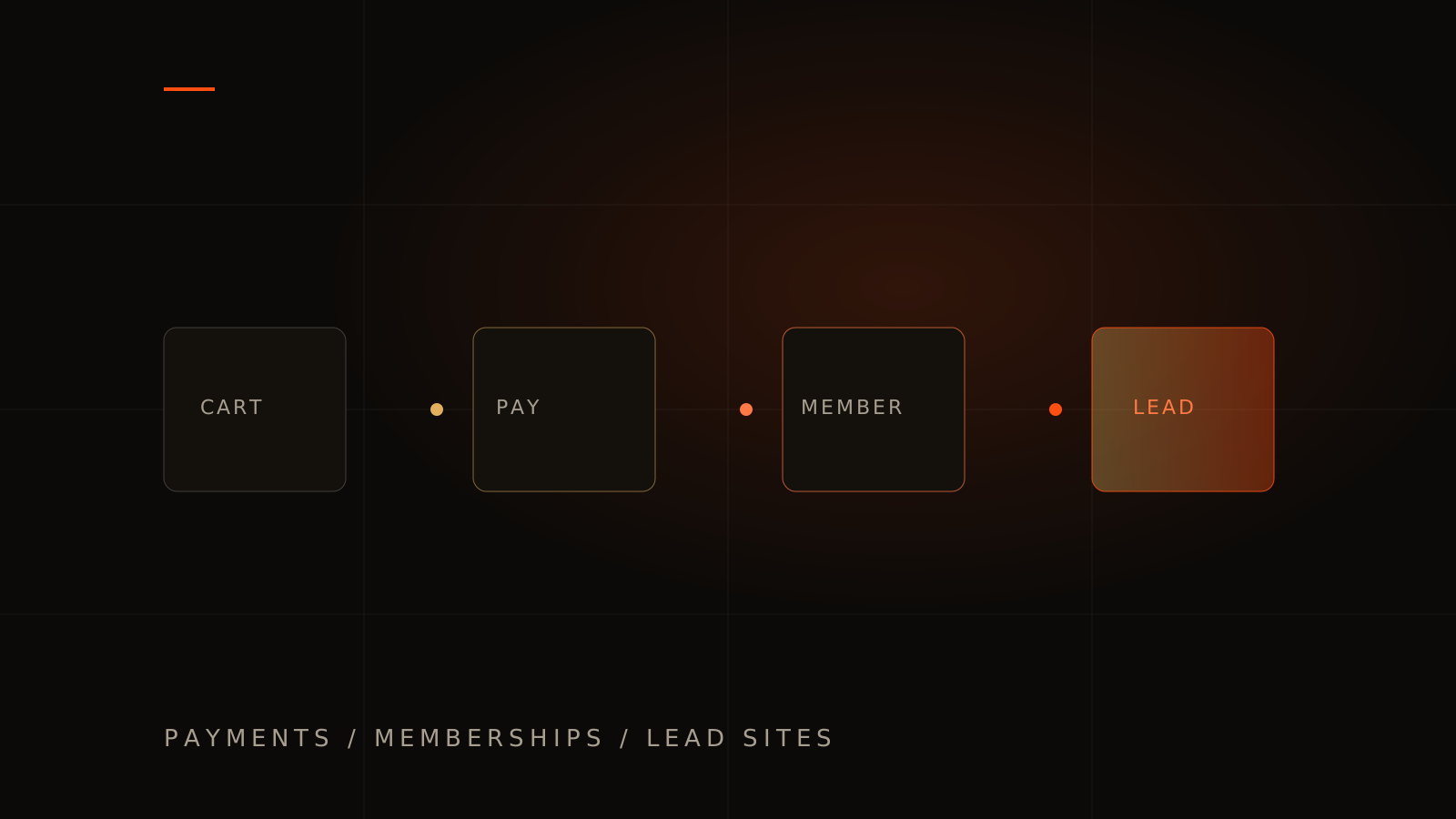
Say ecommerce and people picture warehouses and 10,000 SKUs. For many Melbourne businesses the real opportunity is narrower and more profitable: take payments cleanly, sell memberships or packages, or run a lead site that books high-value work without a shopping cart at all.
This guide covers the ecommerce shapes that actually matter for local service and product brands, how payments should work, and when a custom build beats a bolted-on template store.
Three ecommerce models that win in Melbourne
1. Product or retail stores
Classic catalogue, cart, checkout, shipping or local pickup. Worth building when inventory, margins, and fulfilment are ready. Weak when the brand treats the store as a side project and underinvests in product content, photography, and post-purchase email.
2. Memberships, retainers, and packages
Beauty, fitness, coaching, agencies, and B2B services often make more from recurring or packaged offers than from one-off product sales. The site needs gated content or member areas, recurring billing, upgrades, and clear cancellation rules, not a generic theme shop.
3. Lead and booking sites with payments
Many of the highest-ROI sites we build are not stores. They qualify the visitor, book a job or consult, and take a deposit. That is still ecommerce in the useful sense: money and commitment move online before the first human follow-up.
Payments: the layer that makes or breaks trust
Australians expect cards, wallets, and often Afterpay-style options. The payment flow should feel native to your brand, not like a detour into a third-party theme. Stripe is usually our default because it supports deposits, subscriptions, invoicing, and custom checkout logic without forcing the whole site into a rigid store plugin.
For a deeper look at what is possible beyond a basic charge button, read 7 powerful things you can do with Stripe. The short version: payment infrastructure should match how you sell, including deposits for service jobs, membership renewals, and package upgrades.
Design that converts, not just catalogues
Ecommerce design fails when every page looks like a warehouse aisle. Strong Melbourne ecommerce sites lead with offer clarity, proof, and a short path to purchase or booking. Product pages answer objections. Membership pages sell outcomes and rhythm. Lead sites make the next step obvious on mobile.
Our Luxora Hair case study is the current reference for a full custom stack: luxury hair ecommerce, a Next.js storefront Google can index, and a Flutter app for web, iOS, and Android on the same backend. The Makeup Co case study is the sibling beauty-commerce build, shaped around memberships and brand hubs rather than a generic theme with a logo swap. That is the standard our Website design Melbourne ecommerce builds aim for.
Build vs platform: Shopify, template, or custom
- Shopify or similar suits inventory-heavy retail with standard fulfilment needs.
- Template builders suit simple product counts and low customisation pressure.
- Custom suits hybrid models: services + products, memberships, deposits, CRM-linked quoting, or brand experiences that templates flatten.
Choose the smallest stack that supports the real sales motion. Overbuying a full retail platform for a deposit-and-book business creates admin noise. Underbuying a membership business into a brittle plugin creates churn and support tickets.
If the storefront already exists in Lovable, Bolt or v0, Shopify still owns checkout, tax, inventory and pixels. Treat that preview as a blueprint, not an import. The finish path is Lovable or Bolt to Shopify.
Launch checklist for Melbourne ecommerce sites
- Mobile checkout tested end to end on real devices.
- GST, shipping or service-area rules, and refund copy written in plain English.
- Confirmation emails and internal notifications you can trust.
- Analytics events for add-to-cart, booking start, payment success, and abandoned intent.
- SEO foundations on category, service, and product pages so paid traffic is not your only pipe.
If you are scoping a store, membership site, or payment-enabled lead engine, book a free Discovery Session and we will map the model before anyone argues about theme colours.
Ecommerce website FAQs
Do I need a full online store to take payments?
No. Many Melbourne service businesses only need deposits, invoices, or package checkout. That is often cleaner and cheaper than a full catalogue.
Is Shopify always the right choice in Australia?
It is a strong choice for product retail. For hybrid service businesses, memberships, or highly branded experiences, custom or a leaner stack can fit better.
How long does a custom ecommerce site take?
A focused payments or membership build can land in weeks. Larger catalogues with complex fulfilment take longer. Scope the commercial model first, then the timeline becomes honest.
Can ecommerce and lead generation live on one site?
Yes, and they often should. Sell products where product demand exists, and route high-value service intent into booking or consultation flows on the same domain.