01Finance and business structure
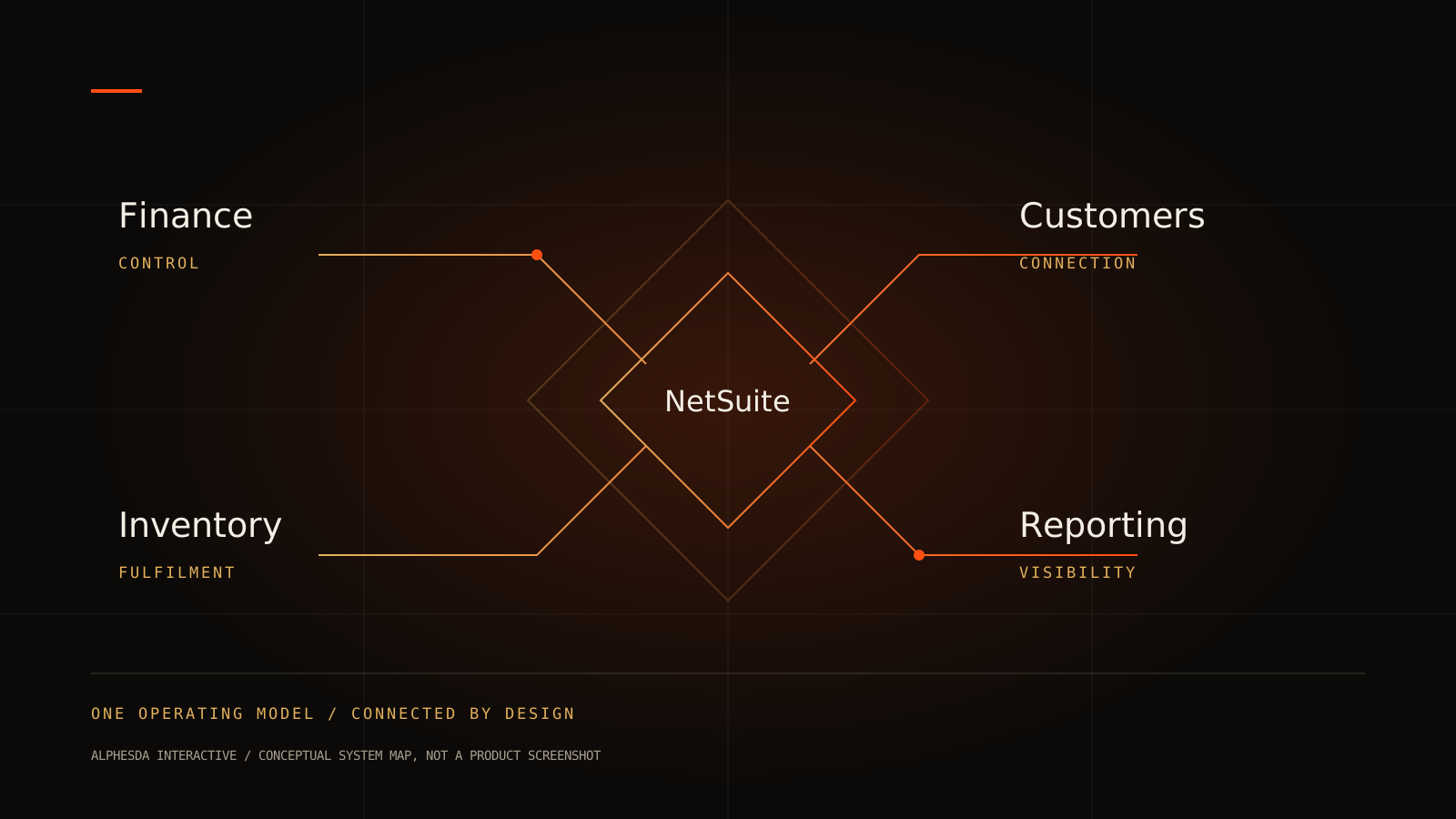
Chart of accounts, departments, classes, locations, transaction forms and role-based access. Map purchasing, billing and financial reporting with your finance team; accounting and tax decisions remain subject to their approval.
02Inventory, purchasing and orders
Structure item records, suppliers, stock locations and purchasing rules. Connect the order-to-fulfilment journey and investigate warehouse, manufacturing or supply-chain modules where the operation needs them.
03CRM, projects and service delivery
Bring customer records and sales handoffs into the operating model. Scope project accounting, time and expense capture, resource planning or service workflows against the relevant NetSuite products.
04Multi-entity operations
For a licensed OneWorld account, plan subsidiaries, currencies and consolidated reporting. Agree entity structure, intercompany processes and local requirements with your finance advisers before configuration.
05Workflow and custom development
Use SuiteBuilder for fields, forms and records; SuiteFlow for suitable approvals and routing; and SuiteScript when custom logic is needed. Keep changes documented, permission-aware and testable through future releases.
06Integrations with clear ownership
Connect ecommerce, CRM, operational applications and reporting tools through suitable connectors or SuiteTalk REST APIs. Define the source of truth, authentication, mappings, retry behaviour and reconciliation before moving production data.
07Migration without guesswork
Inventory source records, map fields and clean duplicates. Rehearse imports in an agreed test environment, reconcile record counts and balances, then use a signed-off cutover and recovery plan.
08Reporting your team can use
Build role-based dashboards, saved searches and SuiteAnalytics Workbooks around agreed measures. Where external BI is needed, assess the integration approach and any additional access or licensing before committing.