Case study
Full Throttle Chaos Booking Website
A distinctive event-hire website connected to a browser-based booking application, staff workflows and useful search content. A dated delivery review checked 33 public pages.
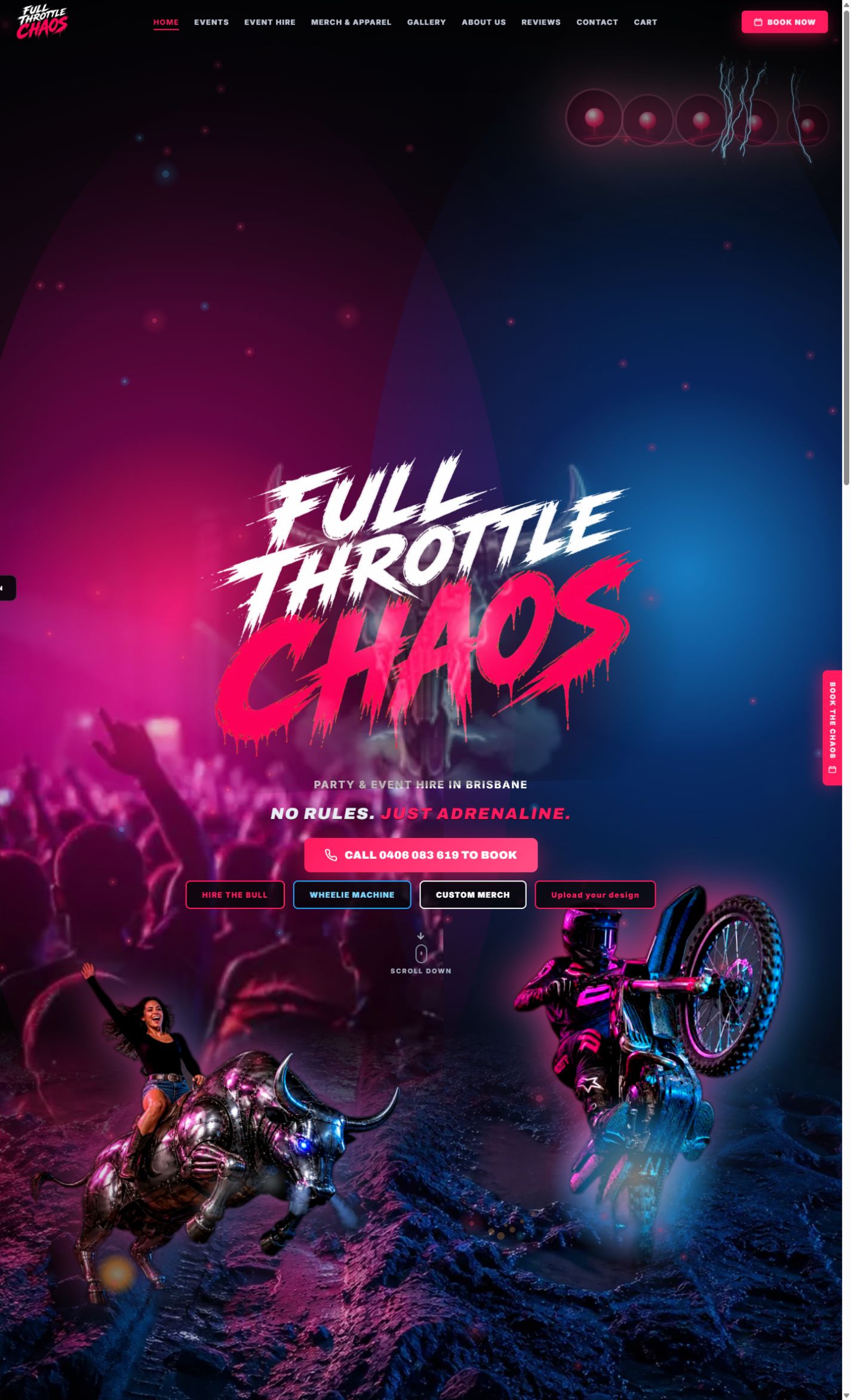
Full Throttle Chaos hires mechanical bulls and wheelie machines for events in Queensland. Alphesda Interactive built its website and booking application, connecting the public offer with the information staff need to review a hire request.
The work spans three connected decisions: how customers understand the hire, how a request becomes an operational record, and which search pages help someone plan the event. The application uses Next.js, Firebase and Firestore, with staff administration and a payment handover.
This case study describes the delivered implementation and a dated technical review. It does not report an attributed increase in bookings, revenue or search rankings.
A website that explains what someone is hiring
A hire page needs more than a product photograph. Customers need the package, operating time, venue considerations, travel information and the next step. We connected the main hire pages with event, regional and planning content so people can investigate those questions before sending a request.
The visual direction keeps the event business recognisable. The booking information then gives the visitor a practical route through the page. Our web design Melbourne service uses the same approach of agreeing the customer task alongside the design.
The booking application behind the page
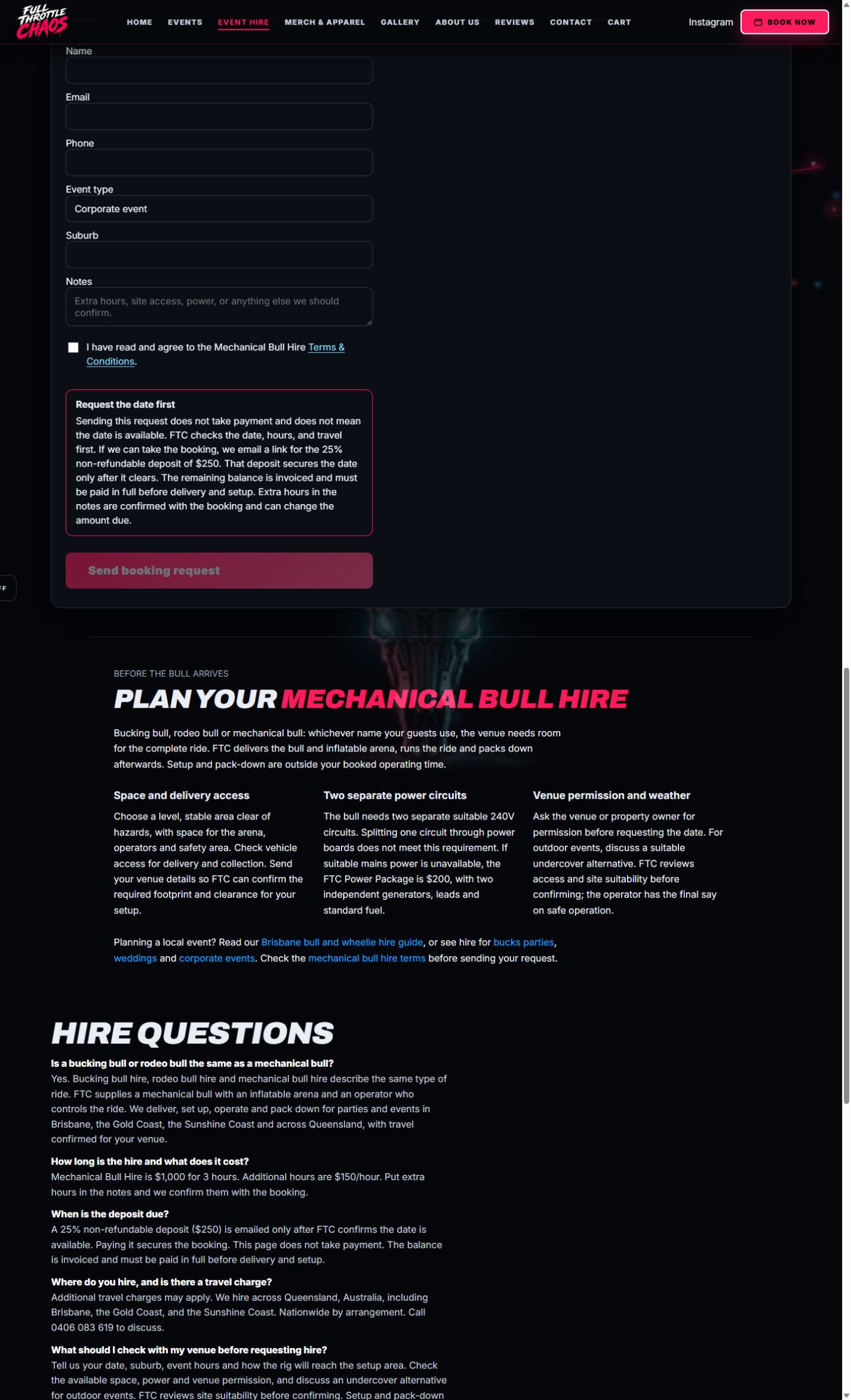
The customer chooses a hire package and date, then supplies the event and contact details. A request and a confirmed booking have different meanings. Staff review the date, venue and hire requirements before the confirmation and deposit handover.
Behind that form, inventory and overlapping bookings affect capacity. The booking implementation checks remaining units when records change, and expired holds have a defined lifecycle. Staff can manage bookings and calendar blocks through the administrative application.
These are application decisions as well as interface decisions. The quote needs to cover record status, permissions, concurrent requests, staff exceptions and the way a customer is told what happens next. Our Melbourne app development service scopes those workflows before building the first release.
For a similar project, start with the booking system and payments brief. It helps distinguish an enquiry form, calendar integration and a custom booking engine.
Search content connected to the hire journey
We developed a structure around the actual services, event types and delivery areas. The hire hub connects the product pages with planning destinations. Event pages answer different venue and organiser questions, rather than repeating one paragraph with a location swapped in.
The release added a hire planning guide, regional information and contextual links from the main offers. Visible questions and structured data share the same source. The sitemap follows publication state, and canonical URLs identify the intended public destinations.
For the client, the useful output is a connected route from a specific event question to the appropriate hire information and request. This is an example of the content and technical work covered by our digital marketing Melbourne service and local SEO scope.
What the delivery checks established
The public-site review on 1 November 2026 checked 33 sitemap pages. All 33 returned HTTP 200 and had unique titles, a single main heading, the expected canonical destination and parseable structured data. Six event pages also exposed the planned question-and-answer content.
A public technical delivery record lists those page-level checks. It is a dated record of serving and search readiness, rather than a fresh crawl of the client site or a measurement of Google indexing and sales.
The project records also distinguish build and source checks from live transactions. This case study does not claim a new customer booking, payment or email-delivery test. Those outcomes need their own acceptance evidence.
What to bring to a similar project
- The hire or service packages and the information customers need before requesting them.
- The rules for dates, capacity, operating areas and staff approval.
- What changes a request into a confirmed booking, including the payment handover.
- The accounts and records your team will operate after launch.
- The search questions, enquiries and completed bookings you want to measure separately.
Alphesda Interactive works from Melbourne with businesses around Australia. Request a Discovery Session with your current site and workflow, or send a booking-application brief.
Project questions
Is this a website or an app?
It combines public website content with a browser-based booking application and staff administration. The project demonstrates web application development; it is not presented as a native App Store release.
Can the same approach suit another hire business?
The pattern can suit businesses where a public offer leads to a request, staff review and booking confirmation. Availability, approval, payments and customer communication still need to be scoped around that business.
Does the technical review prove SEO or sales growth?
No. Successful public responses, clear page titles and consistent structured data establish specific technical checks. Search visibility, qualified enquiries and won work require separate measurement after publication.