The same offer looks different everywhere
Product details, variants, price, stock, conditions and policies may conflict across a storefront, feeds and internal systems. That creates uncertainty for people and automated tools alike.
Enterprise ecommerce / agent-ready discovery
AI assistants need an accurate answer to what you sell, who can buy it, how much it costs and what happens next. Alphesda assesses your catalogue, storefront and handoffs for agentic commerce, then scopes the changes that suit your business. Start with discoverability and trustworthy offers, not an autonomous checkout.
What gets in the way
Product details, variants, price, stock, conditions and policies may conflict across a storefront, feeds and internal systems. That creates uncertainty for people and automated tools alike.
Critical descriptions can sit behind a client-only interface, a login or a fragmented flow. Audit crawlability, canonical pages and accessible structured content before adding another integration.
Trade pricing, tailored quotes, payment consent and supplier fulfilment need clear rules. Agents should not infer permission to order, spend or disclose customer information.
A staged readiness programme
Audit public routes, robots rules, canonical URLs, sitemaps, semantic HTML and structured data. Check that agents and human buyers can reach the same meaningful catalogue and scope without depending on hidden UI.
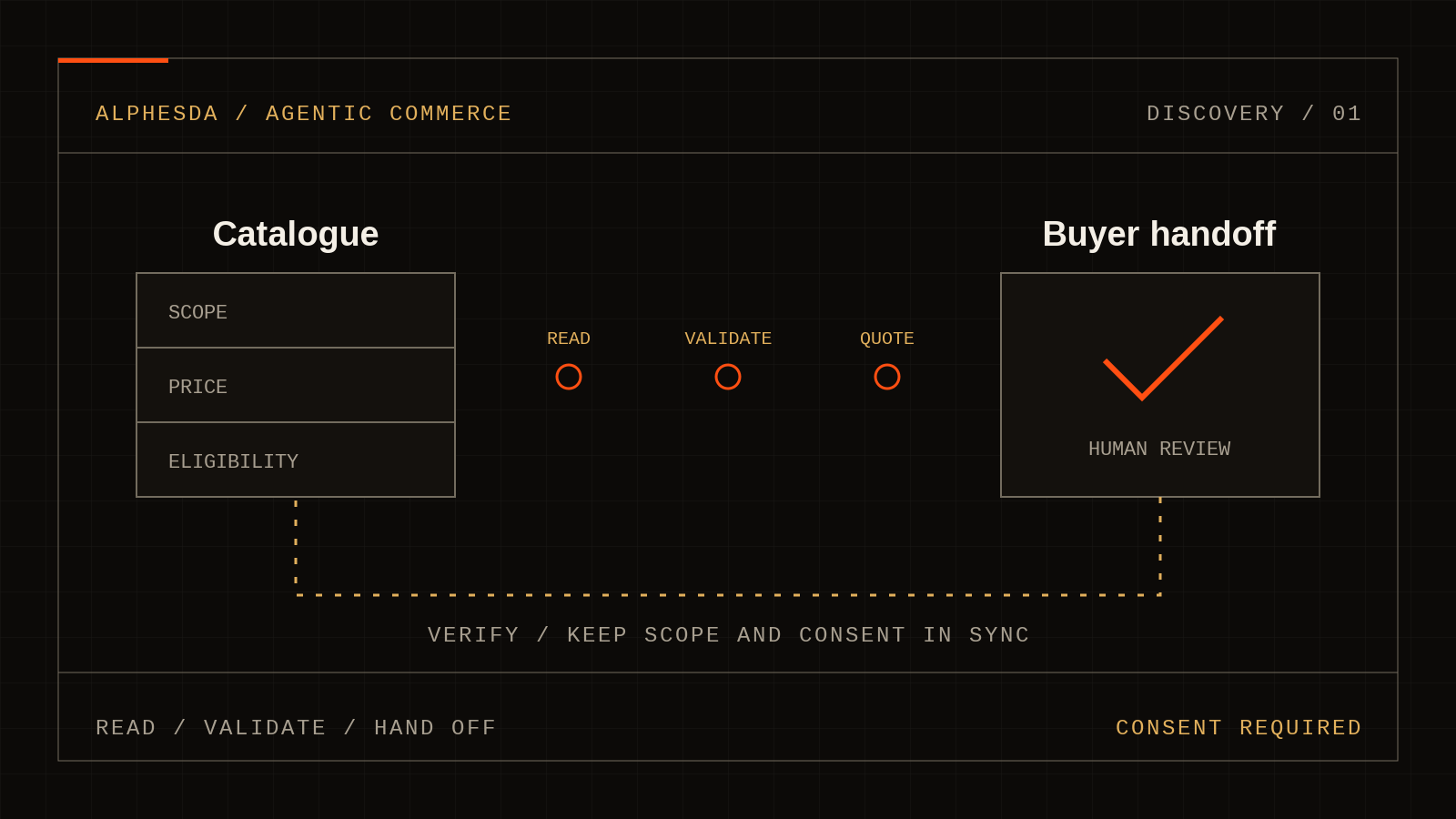
Map identifiers, variants, customer eligibility, stock, price and currency, delivery, returns and policy fields to reliable sources. Define who maintains them and how stale data is detected. For bespoke services, publish scope and an authorised enquiry path rather than inventing an instant purchase.
Map which actions are read-only, which require approval and which are handled by an existing checkout or a person. Set buyer authorisation, data minimisation, failure recovery and order reconciliation requirements before enabling commercial actions.
Where products, regions, platforms and merchant eligibility fit, evaluate applicable storefront feeds and merchant specifications such as Google’s Universal Commerce Protocol or OpenAI’s commerce integrations. A public service catalogue is not itself protocol compliance; merchant onboarding, eligibility, payment, fulfilment and testing are separate.
Fit
You want accurate product discovery, customer-specific conditions and clear buying routes without compromising pricing and fulfilment controls.
Explore B2B and wholesale ecommerce ↗Start with the catalogue, permissions and system ownership. Expand from a narrow use case after validating its reliability.
Explore enterprise ecommerce ↗A catalogue can describe what you offer, conditions and the next human decision. It should not turn custom projects into unauthorised online orders.
See our human-reviewed service catalogue ↗How it works
Audit representative product or service pages, public discovery, structured data, feeds, fulfilment dependencies and the current buyer journey. Deliver a prioritised gap list, test cases and a suggested first release.
Improve a bounded offer set and test the same questions from structured data and human pages. Confirm accurate scope, price, currency and eligibility, then verify the enquiry or checkout handoff in a controlled test environment.
Scope integration and provider eligibility separately, define owners, permissions and acceptance criteria. Test stale offers, rejected or abandoned actions and reconciliation; obtain approval before enabling any monetary action.
The assessment is quoted after reviewing scope. Implementation, protocol or merchant onboarding, third-party platform fees and ongoing support are separate. Send a storefront URL and non-sensitive description of your buyer journey; do not send account credentials or customer records.
Request a readiness assessmentQuestions
No. Clear content helps tools understand a store, but rankings, availability and recommendation decisions depend on external platforms and their policies. We measure the gaps that you can control.
No. Eligibility, use case, location, commercial terms, platform and merchant onboarding vary. Bespoke professional services are generally better served by a human-reviewed quote rather than automatic payment.
No. Our own catalogue is a public discovery document with human-reviewed enquiry links. A supported merchant protocol requires a distinct implementation, provider onboarding and tests before live commercial actions.
We quote a defined assessment after reviewing the number of offers, platforms and buyer journeys involved. Implementation and third-party services are separately scoped.
Alphesda offers independent readiness assessment and implementation support. We do not claim platform partnership, certification, guaranteed eligibility or guaranteed commercial results.
Official guidance
Go deeper
Next step
Show us what you sell, your current storefront and one buyer workflow. We will assess what needs to change and what can remain as it is.