The right price depends on the account
Decide where terms and price lists are owned, what the buyer sees and what staff can override. Test what happens when someone is not signed in or needs approval.
Trade self-service / Australian wholesale
Stop making repeat trade buyers email spreadsheets or ring for the right price. Give approved accounts a better way to find the products they can buy, see the right terms and place repeat orders.
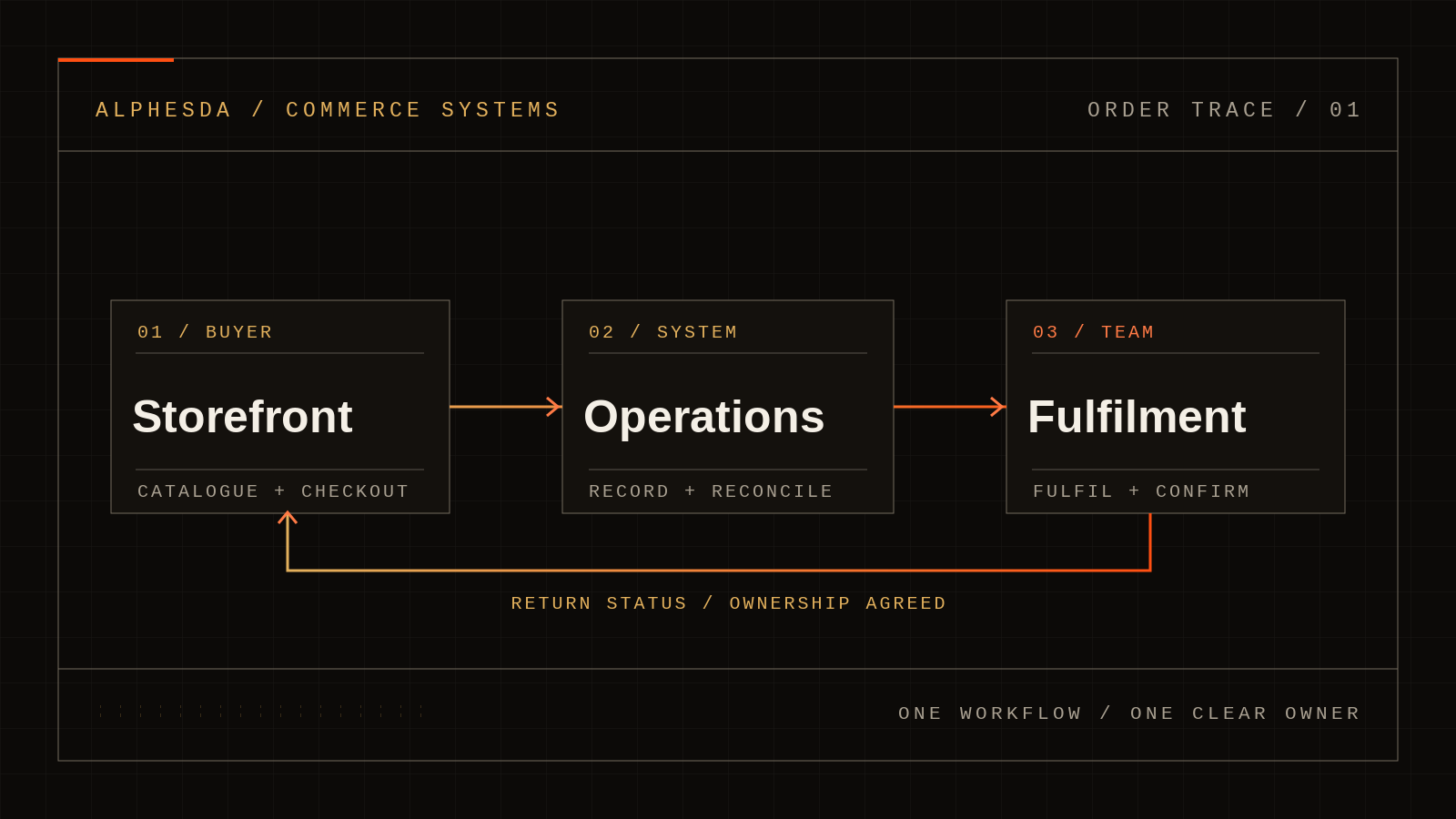
What gets in the way
Before
Orders by email
After
Trade self-service
Decide where terms and price lists are owned, what the buyer sees and what staff can override. Test what happens when someone is not signed in or needs approval.
Map how buyers find stock, reorder frequent lines, submit a purchase order and get a confirmation they can reconcile.
Set a clear handoff for requests that require a quote, a credit check, a backorder decision or a sales conversation.
Built by Alphesda
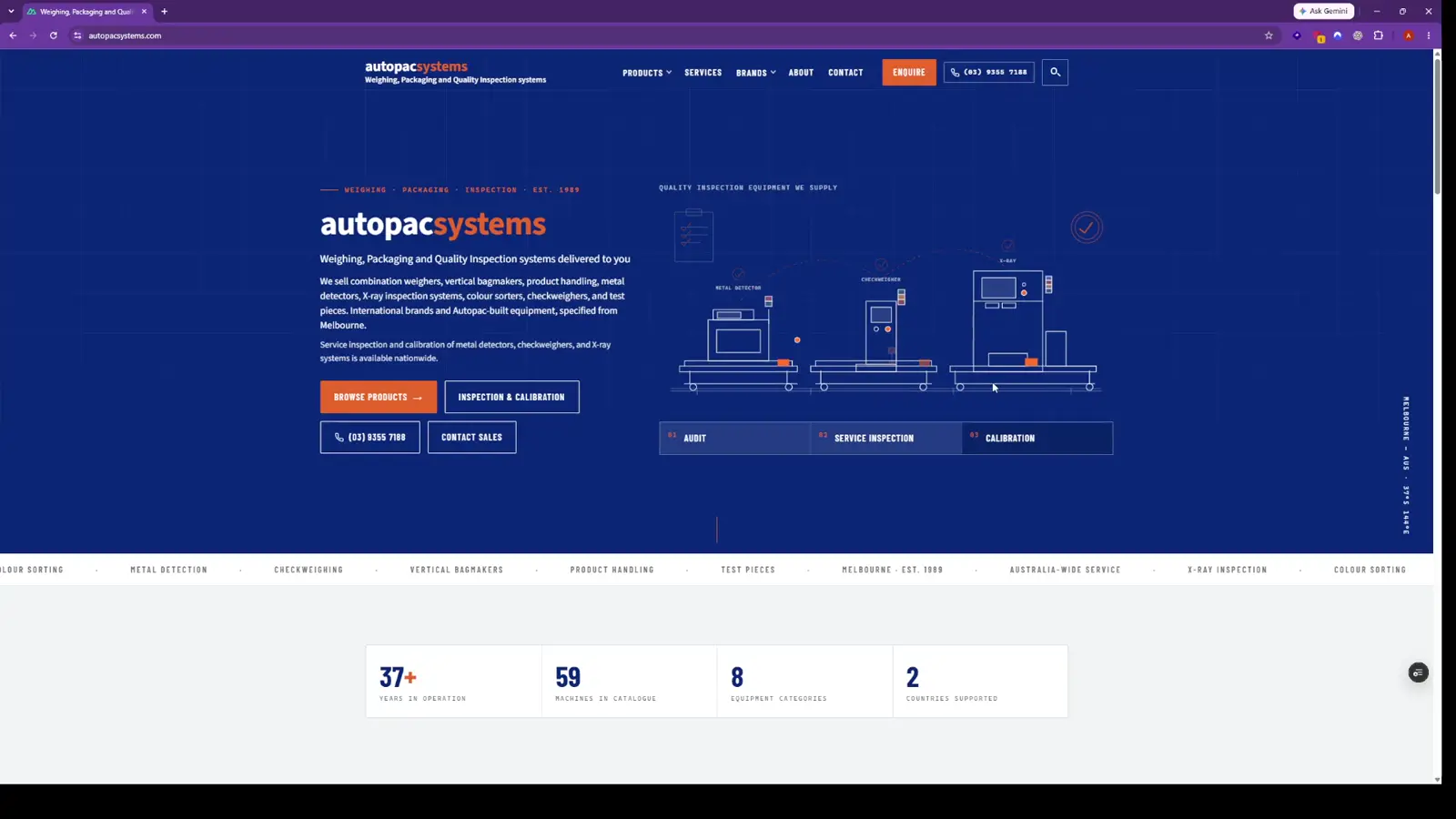
Our searchable equipment catalogue connects specifications with product-specific enquiries and a staff CMS. It is evidence of a catalogue workflow, not evidence of a completed wholesale checkout or vendor implementation.
Inspect the Autopac build ↗Choose the platform after the trade rules
Scope accounts, product visibility, payment terms and prices with your commercial team. Compare what a hosted B2B platform supports without custom maintenance.
Test an approved buyer through sign-in, agreed catalogue and pricing, order placement and staff handoff. Define what an exception looks like and who owns it.
Consider hosted B2B tooling such as Shopify Plus where requirements fit. Evaluate an ERP connection or composable commerce if trade rules and multi-brand needs justify it. Check capabilities, costs and delivery responsibilities before selection.
How it works
Agree example buyers, pricing contracts, purchasing rules and a measurable goal for one workflow.
Validate catalogue and stock, staff corrections, purchase-order or checkout rules, and error recovery with an agreed pilot.
Document permissions, product updates, exceptions and where to get support before inviting more accounts.
If the work fits the one-storefront package, the delivery price is A$72,000 after scope confirmation. Specialist integration-only projects and work beyond that package are quoted separately.
Discuss your ecommerce projectProof
Real builds, not stock screenshots. See how the craft lands for clients like you.
Case study
Case study: Autopac Systems, a Melbourne catalogue for weighing, packaging and inspection equipment.
View project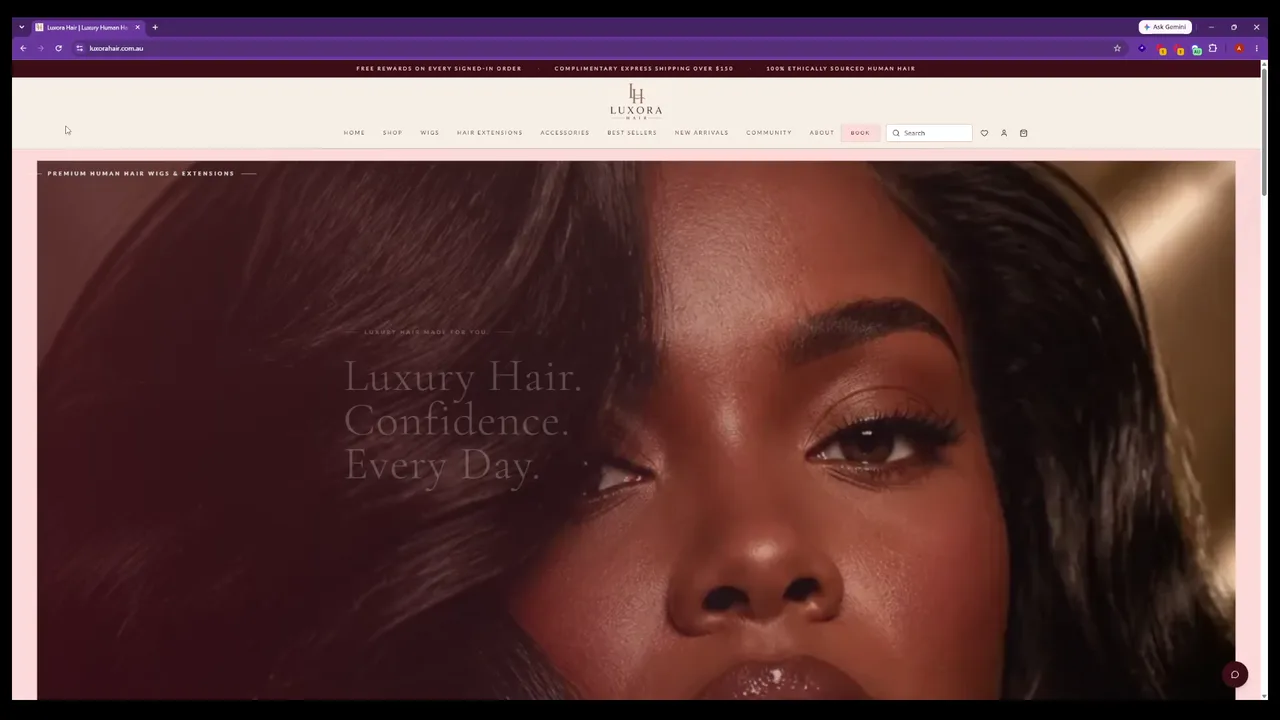
Case study
Case study: Luxora Hair, a custom Australian luxury hair ecommerce platform.
View project
Case study
Explore Ivory & Ash Atelier's salon website design: a Sydney salon identity, custom haircare ecommerce, Stripe checkout and an editable CMS by Alphesda.
View projectQuestions
Yes, where your workflows call for them. Scope which repeat orders buyers can complete themselves and which exceptions still go to a salesperson. Both need a clear status and handoff.
No. The published price is for the defined first storefront package with one agreed standard integration after scope confirmation. Custom price engines, ordering approvals and other advanced B2B rules are quoted separately.
Go deeper
Next step
Tell us how customers order now, where pricing comes from and what takes your staff the most time.